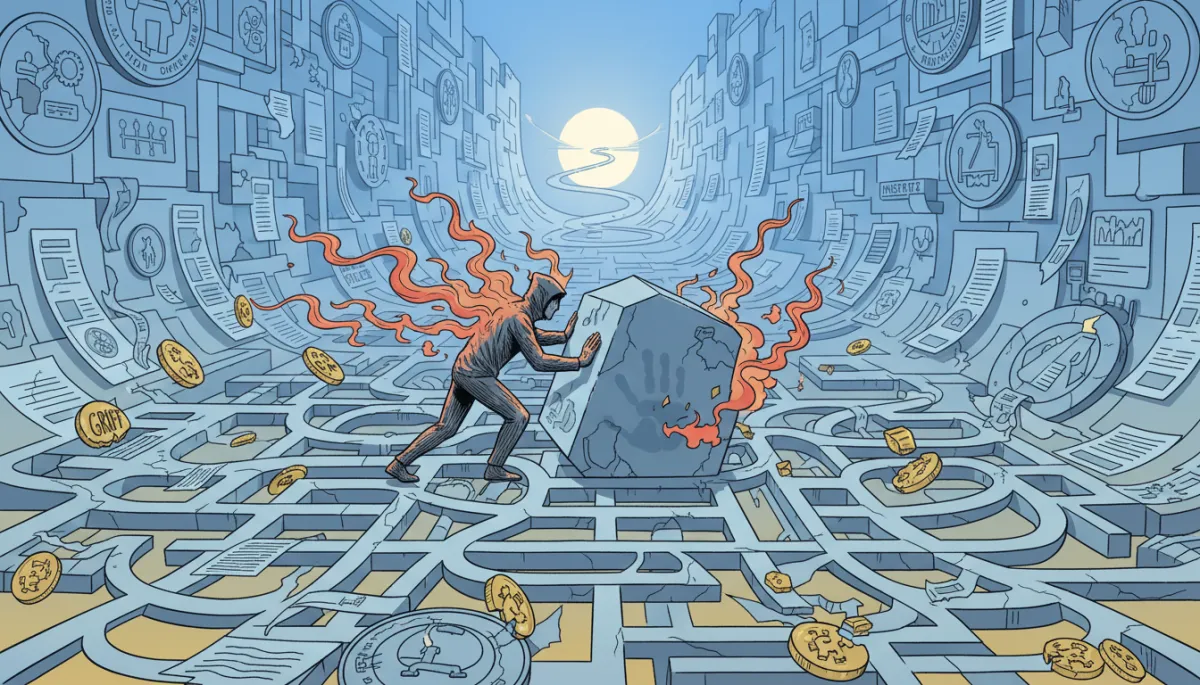
Coping with Systemic Stress and Emotional Resilience
Mental Health, Emotional Resilience, Advocacy
When the System Wears You Down: Coping with Grift, Isolation, and the Weight of Protecting Others
Feeling exhausted by corrupt systems, social distance, and the responsibility of protecting vulnerable people is more common than most admit. This article explores why it feels so heavy—and how to carry it without breaking yourself.
The Emotional Weight of Government Grift and Broken Systems
It is hard to stay emotionally steady when you keep running into government grift, incompetence, or indifference. You watch funds meant for housing, healthcare, or safety disappear into vague “administrative costs.” You see rules enforced on the powerless while the powerful slip through loopholes. You file a form, wait months, and discover it was “lost” or “never received.” On paper, there are programs to protect children and the elderly; in practice, it can feel like a shell game.
Emotionally, this does more than just annoy you. It can trigger:
Helplessness – the sense that nothing you do matters because the rules are rigged.
Rage – not just at “the government,” but at specific people who seem to look away and collect a paycheck.
Moral injury – the feeling that you are forced to witness or participate in something deeply wrong and can’t stop it.
When you are already stretched thin, each new example of grift or neglect doesn’t feel like “just politics.” It feels like a direct attack on your energy, your values, and your hope that things can improve. Over time, that constant friction grinds down your emotional resilience.
Social Isolation in a World That Demands Teamwork
Many systems are built on the assumption that you have a network: family to help with childcare, friends who can watch an elderly parent, neighbors who can go with you to appointments or court dates. But what if you are socially isolated, deeply private, or simply anti-social? What if you have learned, often for good reasons, that people are unreliable, unsafe, or exhausting?
Suddenly, every process feels like a maze that requires a team you don’t have. Need witnesses, references, or co-signers? Need someone to sit with your child while you handle paperwork? Need someone to verify your story? The paperwork doesn’t acknowledge the possibility that you are doing all of this entirely alone, with no one to tag in when you are overwhelmed or sick or just done for the day.
💡 Quiet Truth: Being anti-social or withdrawn doesn’t mean you are weak. Often, it means you have been burned enough times that self-protection feels safer than reaching out.
The emotional cost of isolation shows up as:
Feeling like you are the only one who cares enough to fight.
No one to validate your experience when a clerk is dismissive or a caseworker lies.
A constant low-level fear that if you break down, there is no backup plan.
The Heavy Responsibility of Protecting Children and the Elderly
When you are trying to protect children or elderly relatives, the stakes feel brutally high. You are not just fighting for a nicer outcome—you are fighting to keep someone safe from abuse, neglect, or financial exploitation. Every delay, every “we’ll get back to you,” every missing document can carry real consequences in their daily lives.
This responsibility often brings:
Hypervigilance – constantly scanning for signs of danger, manipulation, or neglect from institutions or relatives.
Guilt – feeling like any setback is your failure, even when the system is clearly broken.
Isolation by choice – pulling away from others because you don’t trust them with the people you’re protecting.
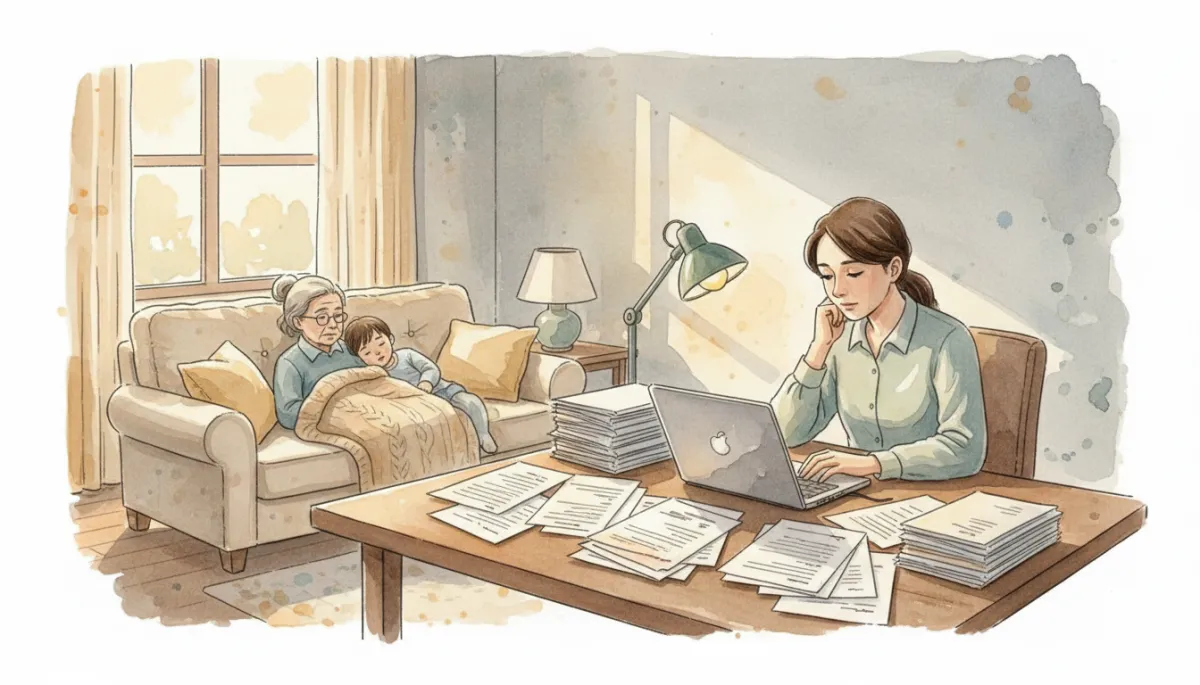
Caregivers often carry the unseen paperwork battles that protect vulnerable family members.
You may find yourself thinking, “If I don’t do this, no one will.” That may even be true. But the emotional cost of being the only line of defense, especially against corrupt or indifferent systems, is enormous. It is no wonder that even small obstacles can feel like personal attacks.
When Tiny Setbacks Feel Like the Last Straw
Emotional burnout doesn’t always appear as a dramatic breakdown. Often, it shows up when a small setback hits you far harder than it “should.” A form returned for a minor error. A phone call not returned. A rude receptionist. A website that crashes right before you submit an application. On a good day, these are annoyances. On a burnt-out day, they can feel like proof that the universe is against you.
This happens because your emotional bandwidth is already maxed out. You are not just dealing with the event in front of you; you are carrying:
Months or years of previous fights with agencies and officials.
The fear of what happens to your child or elder if you lose this round.
Old wounds from times you were dismissed, gaslit, or ignored by people in power.
📌 Key Takeaway: You are not “too sensitive” for feeling crushed by small setbacks. Your reaction makes sense in the context of everything you are already holding.
A Maze Built for Teams, Faced by One Tired Person
Many bureaucratic processes are essentially team sports. Lawyers talk to social workers, doctors talk to case managers, advocates talk to agencies. People who navigate these systems successfully often have at least one of the following: money, connections, or a support network that can share the load. When you are solo and anti-social, you end up playing every position on the field at once: researcher, advocate, secretary, emotional support, and crisis manager.
This mismatch between what the maze expects (a team) and what you actually have (just you) creates constant strain. You may feel ashamed for not “networking” more, or angry that you are pressured to trust strangers when your instincts tell you not to. You might even resent the people you are protecting, not because you don’t love them, but because the system has made their safety feel like an impossible solo mission.
Paths Toward Coping and Quiet Resistance
You cannot single-handedly fix government corruption, erase social isolation, or redesign every system that fails children and the elderly. But you can make the journey less damaging to your own mind and body. Coping here is not about “staying positive.” It is about strategic survival in a hostile environment.
1. Shrink the Battle into Concrete, Manageable Tasks
When everything feels overwhelming, zoom in. Instead of “I have to protect my family from a corrupt system,” try reframing your day as:
Today I will make one phone call and write down the name of the person I spoke to.
I will scan and save two important documents.
I will rest for 10 minutes after each interaction, no matter how “small.”
Breaking the work into tiny, winnable tasks doesn’t trivialize the fight. It keeps you from burning out before you even reach the next checkpoint in the maze.
2. Build “Micro-Support” Without Forcing Yourself into Full Social Mode
If you are anti-social or deeply private, the idea of “building a support network” may sound fake or exhausting. Instead, think in terms of micro-support—small, low-intimacy connections that still lighten your load a little:
An online forum where people discuss the same agency or process you’re dealing with, so you can quietly read and learn from their strategies.
A one-time consultation with a legal aid clinic or advocacy group, even if you never talk to them again, just to get a clearer map of the maze.
A therapist, counselor, or helpline you use purely as an emotional pressure valve, not as a “friend.”
💡 Pro Tip: You don’t have to turn strangers into family. It is enough if they help you solve one problem, once.
3. Protect Your Own Nervous System as Fiercely as You Protect Others
You are likely used to putting children or elders first. But if you collapse, the safety net collapses with you. Protecting your own nervous system is not selfish; it is strategic. Some practical ways to do this include:
Setting a hard limit on how long you spend on calls or forms in a single day, even if the work is unfinished.
Using scripts or written notes for stressful conversations so you don’t have to improvise while overwhelmed.
Allowing yourself small, predictable comforts after each bureaucratic encounter—music, a walk, a hot drink, a game—without guilt.
4. Separate Your Worth from the System’s Outcomes
When decisions affect people you love, it is easy to feel that every denial or delay is a verdict on your competence or value. It isn’t. Systems that tolerate grift and neglect are not reliable judges of anyone’s worth. One powerful internal shift is to repeat, as often as needed:
“This outcome reflects the system, not my effort, not my care, not my value.”
You are responsible for showing up, documenting, advocating, and doing your best within your limits. You are not responsible for corruption, underfunding, or the choices of officials who never meet the people they harm.
You Are Not Weak for Feeling Tired
If you are fighting government grift, living with social isolation, and carrying the responsibility of protecting children or elders, it makes sense that you feel burnt out, angry, and sometimes hopeless. Your reactions are not signs of failure; they are signs that you are human in an inhuman system. The fact that you are still trying, even while exhausted and alone, is evidence of a strength you probably don’t give yourself credit for.
You may not be able to turn the maze into a straight path or magically find a team to walk it with you. But you can learn to move through it in a way that doesn’t destroy you. Small boundaries, small supports, and small acts of self-protection add up. They are not a replacement for justice, but they are a way of saying: I matter, too, even while I’m fighting for others.
