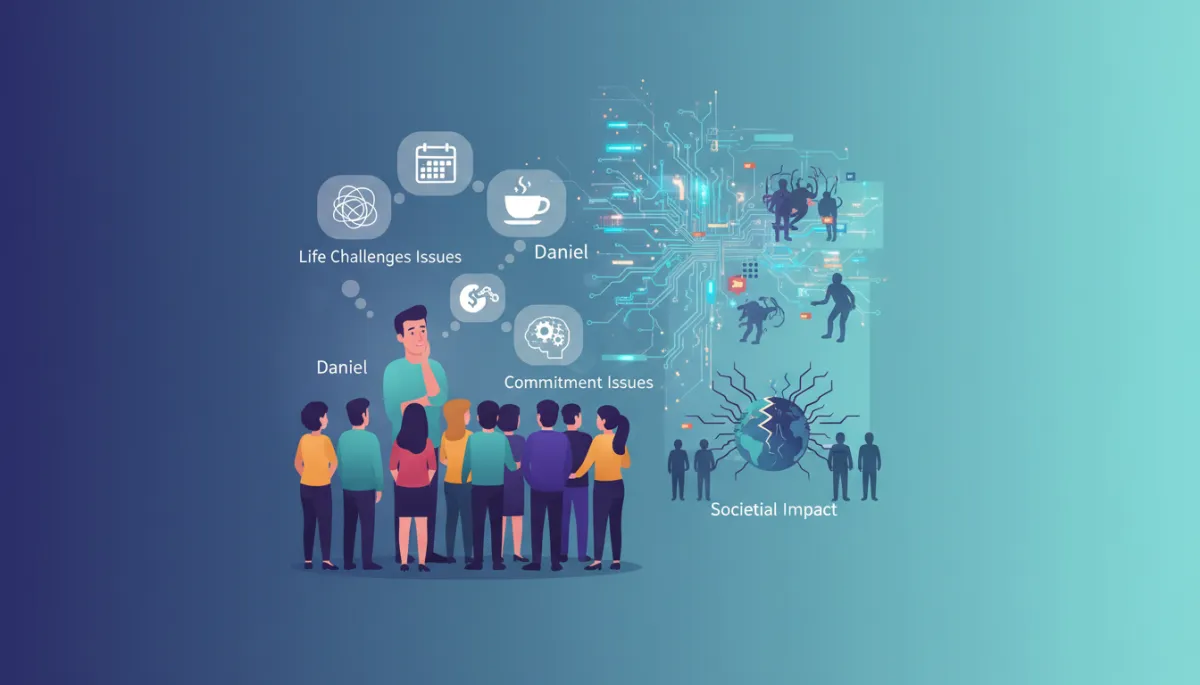
Daniel's Journey: AI Stress & Life Challenges
Mental Health, AI Stress, Life Challenges
When the Future Feels Heavy: Daniel’s Struggle with AI Stress, Life Challenges, and Commitment
Daniel wants to commit to a new program that could genuinely improve his life. Yet every time he gets close, he freezes. Between everyday life challenges and a constant stream of alarming headlines about artificial intelligence, his mind spirals. What if AI malfeasance makes everything worse? What if society changes so fast that his efforts won’t matter? If you recognize yourself in Daniel’s story, you’re not alone—and you’re not broken for feeling this way.
Understanding AI Stress: When the Future Feels Like a Threat
AI Stress is a growing form of anxiety that comes from constantly hearing about artificial intelligence reshaping jobs, relationships, and even democracy. For someone like Daniel, every article about automation, deepfakes, or biased algorithms confirms a fear that the future is unstable and potentially unsafe. Even if his own life is relatively stable, the perceived societal impact of AI can feel like a looming storm on the horizon.
This kind of stress is not irrational. It is a human response to uncertainty and rapid change. The brain is wired to look for danger, and when headlines highlight worst-case scenarios of AI malfeasance—from manipulated information to unfair surveillance—our nervous system reacts as if the threat is already in the room. That constant low-level alarm makes it harder to focus on long-term goals, including committing to a new program, course, or routine that could help us grow.
💡 Pro Tip: Notice how often your worries about AI are triggered by headlines or social media. Reducing exposure, even slightly, can lower AI Stress more than you might expect.
Life Challenges Don’t Pause for Global Uncertainty
Daniel isn’t just worried about the future of technology. He is also dealing with very real, very present life challenges: bills to pay, family expectations, health concerns, and the quiet pressure to “get his life together.” When everyday responsibilities pile up, adding another commitment—like a demanding program or self-improvement plan—can feel overwhelming, even if he believes it would help in the long run.
Many people in Daniel’s position think, “I’ll start when things calm down.” But life rarely offers a perfect, stress-free window. Work deadlines, relationship tensions, and financial worries coexist with broader fears about the economy, climate, and now AI. This combination creates a heavy emotional load that drains motivation and makes it difficult to take the first step toward change.

Competing demands from daily life and global news can quietly erode focus and drive.
The Hidden Link Between AI Stress and Mental Health
Constant worry about the future of society doesn’t stay in the abstract. It seeps into mental health. People like Daniel may notice trouble sleeping, a sense of numbness, or a persistent background feeling of “what’s the point?” These are classic signs of anxiety and low mood, and they are amplified when you believe the world might be heading in a dangerous direction beyond your control.
AI Stress can show up as:
Overthinking worst-case scenarios about jobs, privacy, and security
Feeling powerless when hearing about AI-driven inequality or misinformation
A sense that personal goals are insignificant compared to global risks
Over time, this can erode self-belief. If the future feels unstable, investing in yourself can feel risky or even naive. That mental narrative—“Why bother if AI might wreck everything?”—is a quiet but powerful enemy of growth. Recognizing it as a mental health pattern, not a deep truth about reality, is a crucial first step toward change.
⚠️ Warning: If your worries about AI or the future are leading to persistent sadness, panic, or thoughts of self-harm, reach out to a mental health professional or helpline immediately. Your wellbeing matters more than any technology trend.
Commitment Issues in an Uncertain World: Why Daniel Keeps Pulling Back
On the surface, Daniel’s struggle looks like classic commitment issues: he signs up, then cancels; he starts, then stops; he tells himself he’ll “revisit it later.” But underneath, his hesitation is rooted in fear and exhaustion, not laziness or lack of willpower. When the world feels unstable, committing to anything long-term can feel like stepping onto thin ice.
There are several psychological patterns at play:
Fear of wasted effort: “What if AI changes everything and this program no longer matters?”
Perfectionism: Waiting for the “right time” when life is calm and the future feels clearer.
Emotional overload: Life challenges and AI Stress combine, leaving little energy for new commitments.
Understanding this can be freeing. If you relate to Daniel, your commitment issues are not a personal failure. They are a signal that your nervous system is overwhelmed. The goal is not to bully yourself into discipline, but to create conditions where commitment feels safer and more manageable.
AI Malfeasance and Societal Impact: Valid Concerns, Not Total Destiny
Part of Daniel’s hesitation comes from reading about real cases of AI malfeasance: algorithms that discriminate, tools used for mass surveillance, or systems that spread misinformation at scale. These are serious issues with undeniable societal impact. It is healthy to care about them. But when every article paints a picture of inevitable decline, it can create a false sense that nothing we do personally can make a difference.
The fuller story is more complex. Around the world, researchers, policymakers, and activists are working on ethical AI guidelines, transparency standards, and legal protections. Many organizations are investing in responsible design, bias audits, and human oversight. Progress is uneven, but it exists. The future is being shaped not only by those who misuse AI, but also by those who push for accountability and fairness.
For individuals, this means two things:
Your skills, education, and resilience still matter in any future scenario.
Committing to your own growth can actually increase your capacity to influence how AI is used in your workplace, community, or field.
Instead of seeing AI’s societal impact as a reason to disengage, you can reframe it as a reason to become more informed, more skilled, and more grounded. That shift in perspective can soften AI Stress and make long-term commitments feel meaningful again.
Practical Ways Daniel (and You) Can Move Forward Anyway
How can someone like Daniel commit to a program when life feels chaotic and the future uncertain? The answer is not to pretend the worries don’t exist, but to work with them intentionally. Here are some practical approaches:
Set a shorter commitment window. Instead of “I’ll do this for a year,” try “I’ll give this program four focused weeks and then reassess.” Shorter horizons feel safer to an anxious mind.
Create a media boundary. Schedule specific times to read about AI and global news, and avoid doom-scrolling before or after working on your goals. This reduces AI Stress during your most productive hours.
Connect your program to values, not just outcomes. Instead of focusing only on career or financial results, link your commitment to deeper values like learning, contribution, or resilience—qualities that matter in any future.
Use micro-commitments. Promise yourself just 10–15 minutes a day. Often, starting is the hardest part; once you begin, momentum carries you further.
Talk about your fears. Whether with a friend, coach, or therapist, voicing concerns about AI, life challenges, and mental health can reduce their intensity and help you see options more clearly.
Choosing to Commit in Spite of Uncertainty
Daniel’s story is not about someone who doesn’t care or can’t decide. It is about a human being trying to protect himself in a world that feels unpredictable. AI Stress, life challenges, and concerns about AI malfeasance and societal impact are real forces shaping our emotional landscape. But they do not have to dictate our every choice.
Committing to a program—or any meaningful path—is an act of courage, not denial. It says, “Yes, the future is uncertain, and I choose to invest in myself anyway.” That decision can strengthen your mental health, expand your options, and even position you to participate in shaping how AI is used in your corner of the world.
If you see yourself in Daniel, consider this your gentle invitation: you do not need to wait for perfect clarity or a calmer world before you begin. Start small. Protect your mind from constant alarm. Honor your fears, but do not hand them the steering wheel. The future is not set in stone—and your choices today still matter more than you think.