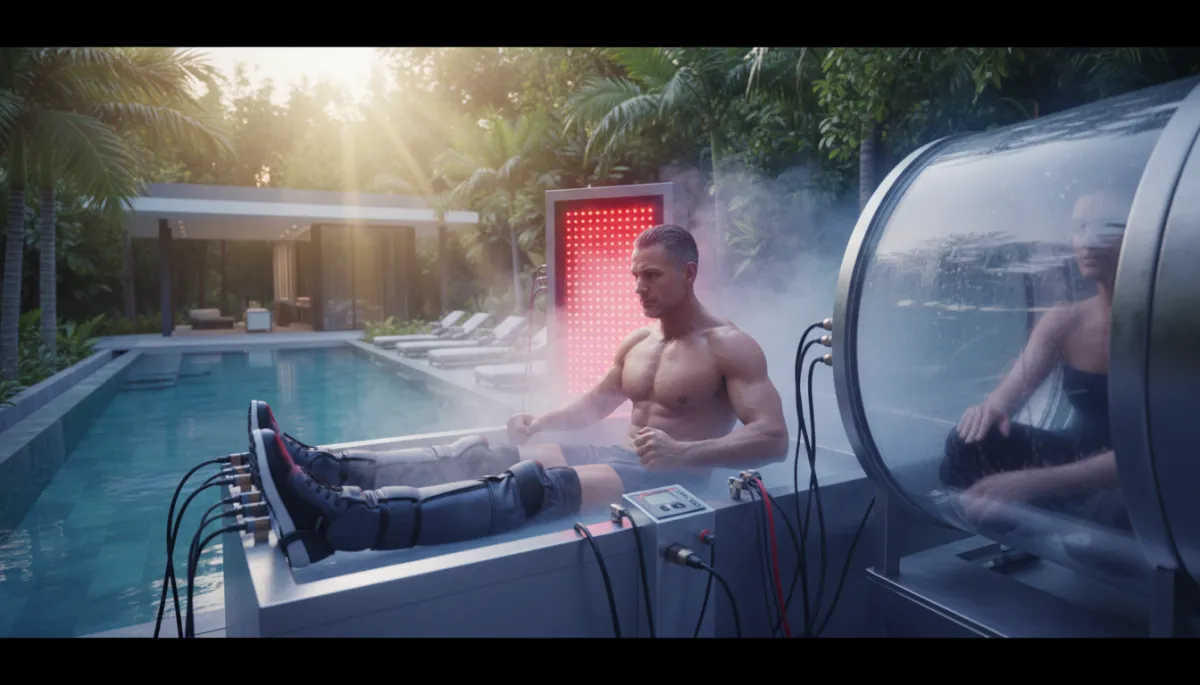
Extreme Biohacking in Thailand: Brutal Recovery Test
Biohacking, Recovery, Thailand, Extreme Protocols
Extreme Biohacking in Thailand: I Tried the Most Brutal Recovery Protocol So You Don’t Have To
Imagine a full-throttle, vlog-style journey where every scene pushes your body harder, deeper, and smarter into recovery. That was my mission in Thailand: to hunt down the most extreme recovery protocol I could find, submit myself to it for 48 hours, and report back with zero filter. If you’re obsessed with biohacking, performance, and squeezing every drop of recovery out of your system, buckle up—this is going to be intense.
Welcome to Bangkok: Where Wellness Feels Like a Sci‑Fi Movie
The vlog opens with the chaos of Bangkok: scooters buzzing, street food sizzling, neon signs reflecting off wet pavement. Then—hard cut—to a glass-and-steel wellness center that looks more like a boutique tech lab than a spa. Floor-to-ceiling windows, soft neutral interiors, staff in minimalist uniforms. This isn’t a place for cucumber slices and fluffy robes. This is where people come to rebuild themselves.
My goal for this trip was simple but savage: stack as many evidence-backed, high-intensity recovery treatments as possible into a single, grueling protocol—then see what happens to my body, my mind, and my performance markers. No half measures. No “gentle reset.” This was going to be a full-system reboot on hard mode.
Dive Deeper: Extreme Biohacking in Action
This article has explored the critical distinction between mainstream wellness and the transformative power of extreme biohacking. To witness how unconstrained science and regenerative medicine are applied to shatter human limits and achieve a complete biological reset, we invite you to watch our in-depth video investigation.
The Protocol: A Brutal, Layered Stack of Recovery Weapons
Before we hit record, the clinic’s performance doctor sat me down and mapped out what he called an “elite-tier, extreme recovery stack.” Think of it as a boss-level playlist for your nervous system, mitochondria, muscles, and mind. Here’s the combo we locked in, all to be done in a single day, with follow-up checks the next morning:
Hyperbaric Oxygen Therapy (HBOT) – 90 minutes in a pressurized chamber to supercharge oxygen delivery and accelerate tissue repair.
Whole-Body Cryotherapy – Three minutes at around -130°C to slam the nervous system, reduce inflammation, and trigger powerful hormonal shifts.
Red Light and Near-Infrared Therapy – Full-body exposure to support mitochondrial function, collagen production, and muscle recovery.
High-Dose IV Drip – Customized vitamins, minerals, amino acids, and glutathione to replenish and detox at warp speed.
Thai Sports Massage with Trigger Point Torture – Aggressive, deep-tissue work that feels like a fight but leaves your fascia humming.
Infrared Sauna “Finish Him” Round – 30–40 minutes of intense heat and sweat to flush, relax, and recalibrate the nervous system.
💡 Pro Tip: This is not a beginner protocol. If you’re new to biohacking, start with one or two of these treatments and build up gradually. Stacking them all in one day is like going from couch to ultramarathon.
Scene 1: Hyperbaric Oxygen – The Calm Before the Storm
The vlog cuts to me climbing into what looks like a spaceship pod. The hyperbaric chamber seals with a soft hiss. The nurse checks my vitals, hands me a mask, and suddenly my ears start popping as the pressure rises. It’s like being on a plane during takeoff—only you’re not moving, and you’re breathing almost pure oxygen under pressure.
For 90 minutes, the world goes quiet. On camera, you see my heart rate on a monitor, slowly dropping as my body sinks into a deep parasympathetic state. This is where the magic begins: more oxygen dissolving into plasma, more fuel for healing, more power for energy-hungry tissues. It feels deceptively gentle, but you can sense your system winding down in the best possible way—like a hard reset button for stress.
📌 Key Takeaway: HBOT is the stealth weapon of this protocol—no drama, no pain, but it sets the stage for everything that comes next by priming your body to repair at a higher level.
Scene 2: Cryotherapy – Three Minutes in the Deep Freeze
Then the energy spikes. The vlog jumps to a shot of me stripped down to shorts, thick socks, gloves, and a face mask. The cryochamber door swings open, and a white cloud of vapor spills out like something from a sci‑fi horror movie. The tech gives me a grin that says, “You’re going to hate this, but you’ll thank me later.”
Inside, the temperature drops to around -130°C. The timer starts. Three minutes. On video, you can see my breath turning to fog, my skin going bright red, my body shivering like it’s trying to break out of its own frame. Your primal brain is screaming, Get out! But your rational brain knows: this intense cold is triggering a cascade—reduced inflammation, endorphin release, and a powerful rebound in circulation when you step out.
When the door opens, I explode out of the chamber like I’ve just finished a sprint. Energy is through the roof. My skin feels electric. You can practically see the adrenaline and endorphins hitting in real time. It’s brutal, but the afterglow is insane—like a full-body espresso shot without the jitters.

The post-cryotherapy surge feels like flipping a switch from sluggish to supercharged.
Scene 3: Red Light Therapy – Charging Your Cells Like Batteries
Next, the vlog shifts to a warm, glowing room bathed in deep red and near-infrared light. I’m standing between two full-body panels, goggles on, skin still buzzing from the cold. If cryotherapy is a slap in the face, red light is a slow, deep hug for your cells. The panels fire up, and suddenly it’s like standing in a sunbeam that doesn’t burn you—but feeds you.
From a biohacking perspective, this is where we double down on recovery: photobiomodulation supports mitochondrial function, boosts ATP production, and can reduce muscle soreness and joint pain. On camera, you see me rotating slowly, letting the light hit every angle—neck, shoulders, lower back, calves. The energy here is calmer but still intense; you can almost feel your tissues soaking it in like a dry sponge hitting water.
💡 Pro Tip: If you train hard or sit at a desk all day, targeted red light sessions on your neck, hips, and lower back can be a game changer for pain and stiffness, even without the full extreme stack.
Scene 4: IV Drip – Recovery on Fast-Forward
Cut to a reclining chair, dim lights, and a clear IV bag hanging overhead, filled with what looks like liquid energy. The nurse finds a vein, tapes the line, and suddenly everything you’ve lost through training, travel, and stress is on its way back in—directly into your bloodstream.
This drip is stacked: vitamin C, B-complex, magnesium, amino acids for muscle repair, electrolytes, and a hefty dose of glutathione for detox. You see the camera pan across the ingredients list, then back to my face as the first wave hits. There’s this subtle but undeniable lift—like your brain just got fresh power, your muscles got permission to relax, and your mood got an upgrade all at once.
For travelers, high performers, or anyone pushing their limits, this is where recovery stops being passive. Instead of waiting for your body to catch up, you flood it with what it needs, right now. In the vlog, I describe it as “plugging into a wall charger after living on 5% battery for weeks.”
Scene 5: Thai Sports Massage – Pain, Pressure, and Pure Release
If you’ve never had a true Thai sports massage, the vlog footage makes one thing very clear: this is not a relaxing spa moment. This is combat. You see elbows digging into hamstrings, knees pinning down shoulders, hands twisting and stretching limbs into angles you didn’t know you had. At one point, the therapist is literally on the table, using her bodyweight to open my hips like a rusty hinge.
It’s intense. I’m breathing hard, gripping the sheet, occasionally laughing from the shock of pressure. But between the grimaces, you catch something else on camera: relief. Knots that have been locked for months finally letting go. Fascia sliding instead of sticking. Joints moving through ranges that used to feel blocked. This is the “grueling” part of the protocol in its purest form—pain with a purpose, discomfort that delivers.
📌 Key Takeaway: Extreme recovery isn’t always comfortable. The most effective work often happens right at the edge of your comfort zone—physically, mentally, and emotionally.
Scene 6: Infrared Sauna – The Final Sweat-Soaked Showdown
By the time we hit the infrared sauna, I’m already cooked—but the protocol isn’t done with me yet. The vlog shows me stepping into a wooden cabin glowing with soft orange light. Temperature climbing. Heart rate monitor strapped on. Water bottle within reach. This is the final round: intense heat to drive circulation, sweat out metabolic waste, and force a deep parasympathetic drop once you’re done.
Fifteen minutes in, I’m drenched. Twenty-five minutes in, my heart rate is in a light cardio zone, but I’m just sitting there. By minute thirty-five, it’s a mental game: stay present, breathe slowly, ride the wave. The camera catches the moment I step out—face flushed, towel soaked, but eyes bright and clear. It’s exhaustion and clarity smashed together, and it feels incredible.
The Morning After: Data, Feelings, and Brutal Honesty
The next morning, the vlog opens on a quiet Bangkok sunrise. No filters, no fancy lighting—just me, a WHOOP strap, and a readiness score that tells the real story. Resting heart rate: down. Heart rate variability: up. Sleep quality: significantly better than the previous week. Subjectively, I feel lighter, clearer, and strangely motivated, like my body finally got the memo that it’s allowed to recover, not just grind.
Was I sore from the massage? Absolutely. But it was a different kind of soreness—clean, open, like the aftermath of a good workout rather than the sludge of chronic tension. My joints felt smoother. My mind felt less noisy. And when we filmed a quick reaction sprint session later that day, my movement felt sharper, more connected, more explosive. For a protocol this punishing, the payoff was undeniably real.
Is This Extreme Protocol for You?
If you’re into biohacking and recovery, Thailand is a playground. The prices are often lower than in Western clinics, the staff are highly trained, and the culture already embraces massage, heat, and bodywork as normal parts of life. But this specific protocol—the full stacked, back-to-back, no-breaks version—is not for everyone. It’s intense. It’s demanding. And it will expose every weakness in your sleep, nutrition, and stress management habits.
Here’s who this kind of extreme recovery stack makes sense for:
Hard-training athletes who need to bounce back between brutal sessions or competitions.
High performers and entrepreneurs running hot on stress, travel, and long hours, who want to avoid burnout.
Biohackers who love data, experimentation, and pushing their limits in a controlled, supervised environment.
⚠️ Warning: Always consult a qualified medical professional before stacking intense treatments like these, especially if you have cardiovascular, respiratory, or metabolic conditions. Extreme protocols amplify whatever is already happening in your body—for better or worse.
How to Build Your Own (Safer) Version of This Protocol
You don’t have to fly to Bangkok and replicate every brutal minute of this to get powerful results. If you’re a consumer curious about extreme recovery but not ready to go full gladiator, here’s how to build a smarter, more accessible version of this stack in stages:
Start with one hero treatment. Choose either cryotherapy, red light therapy, or infrared sauna, and do it 1–2 times per week for a month. Track your sleep, soreness, and mood.
Add bodywork. Incorporate Thai or sports massage once every 1–2 weeks to address tension and mobility. Yes, it will hurt. That’s part of the process.
Level up with IV therapy or HBOT. Once you know how your body responds, consider adding IV drips or hyperbaric sessions under professional supervision for deeper recovery.
Only then consider stacking. When your baseline health is solid and you’ve tested each treatment individually, you can start stacking two, then three, in a single day—always listening to your body and watching your data.
Why Thailand Is a Mecca for Extreme Recovery and Biohacking
One of the underrated stars of this vlog-style journey is the setting itself. Thailand brings a unique mix of advanced medical infrastructure, wellness culture, and affordability that makes extreme protocols like this possible for more people—not just pro athletes and celebrities. In a single neighborhood, you can find cryotherapy, HBOT, IV clinics, red light studios, and world-class Thai massage, all within a short ride of your hotel or training camp.
Add in the tropical climate, nutrient-dense local food, and a slower pace of life outside the city chaos, and you’ve got an environment that supports recovery at every level. The vlog captures this contrast: one moment you’re in a high-tech chamber; the next, you’re sipping coconut water under a palm tree, feeling your nervous system downshift in real time.
The Real Cost of Extreme Recovery: Time, Energy, and Intention
Let’s be real: you don’t just pay for this protocol with money. You pay with time, energy, and the willingness to be uncomfortable. A full stacked day like the one in the vlog takes hours. You’ll come out wiped before you feel revived. You’ll need to hydrate, eat well, and sleep deeply afterward to truly cash in on the benefits. Extreme recovery is an investment, not a magic trick.
But if you’re serious about your performance—whether that’s in the gym, on the field, in the boardroom, or behind a camera—this kind of focused, high-intensity reset can be a secret weapon. The vlog doesn’t sugarcoat the pain, the sweat, or the shock. But it also doesn’t hide the payoff: clearer thinking, lighter body, deeper sleep, and a sense that your system has finally caught up with your ambition.
Final Thoughts: Extreme, Yes. Worth It? Absolutely—If You Respect It.
As the vlog closes, you see one last shot: Bangkok at night, lights reflecting off the river, my voiceover cutting through the noise. Extreme biohacking isn’t about punishing your body; it’s about partnering with it at a higher level. This Thai protocol was grueling, intense, and at times overwhelming—but it was also one of the most effective recovery experiences I’ve ever had.
If you’re a recovery-obsessed consumer, a data-driven biohacker, or a high performer chasing that extra edge, consider this your invitation. You don’t have to copy every step, but you can take the principles: stack smart, push your limits with intention, and give your body the same level of strategy you give your training or your work. When you do, recovery stops being a chore—and becomes your competitive advantage.
Thailand just happens to be one of the best stages on the planet to run that experiment. And if you ever decide to step into the chamber, onto the massage table, and into the sauna back-to-back, remember this: it’s going to be brutal. It’s going to be intense. And if you do it right, it might just be the most powerful reset your body has ever experienced.