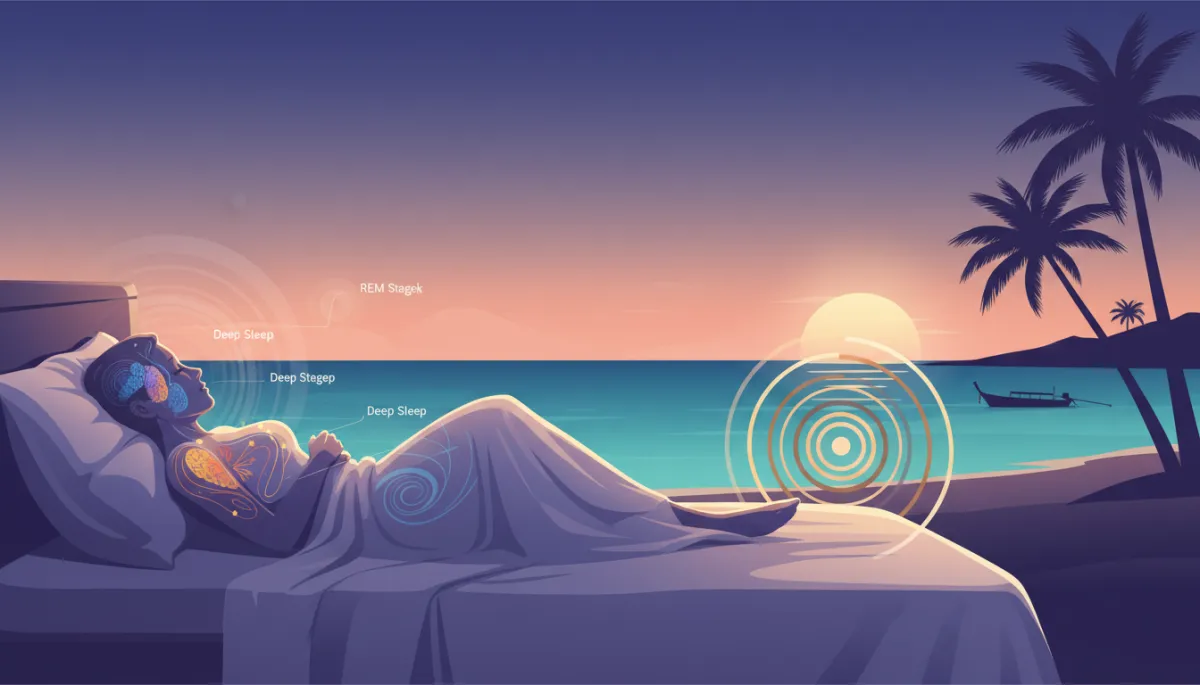
Optimize Sleep in Phuket: Reset Your Circadian Rhythms
Health, Sleep Optimization
Sleep Optimization in Phuket: Using REM, Deep Sleep and Nature to Reset Your Circadian Rhythms
Struggling with broken sleep, jet lag, or late-night screen habits? By understanding your sleep stages and harnessing the unique Phuket environment, you can reset your circadian rhythms and enjoy deeper, more restorative rest.
Why Sleep Optimization Starts with Understanding Your Sleep Stages
Sleep Optimization is not just about getting “eight hours.” The quality of those hours depends on how your night is divided between REM Sleep, Deep Sleep, and lighter stages. When your circadian rhythms are disrupted by travel, stress, or late nights, these stages can become fragmented, leaving you tired even after a full night in bed. Before exploring how the Phuket environment can help, it is essential to understand what is happening in your brain and body while you sleep.
The Architecture of Sleep: From Light Sleep to REM and Deep Sleep
A typical night’s sleep cycles through several stages roughly every 90 minutes. These cycles repeat four to six times per night, and each stage serves a different purpose in overall sleep quality and recovery:
Stage 1 (Light Sleep): The transition from wakefulness to sleep. Muscles relax, and brain activity begins to slow. This is the easiest stage to wake from and usually lasts only a few minutes.
Stage 2 (Light–Moderate Sleep): Body temperature drops, heart rate slows, and eye movements stop. You spend the largest portion of the night here, and it acts as a bridge between wakefulness and deeper stages.
Stage 3 (Deep Sleep): Often called slow-wave sleep, this is when the body focuses on physical restoration—tissue repair, immune strengthening, and growth hormone release.
REM Sleep (Rapid Eye Movement): Brain activity becomes more similar to wakefulness, vivid dreams occur, and emotional as well as cognitive processing take center stage.
REM Sleep vs. Deep Sleep: Different Stages, Different Benefits
To truly optimize sleep, you need a healthy balance of REM Sleep and Deep Sleep. They are not interchangeable; each contributes unique benefits to mental and physical health. When circadian rhythms are thrown off—common after long flights to Phuket or irregular work schedules—these stages can be shortened, delayed, or scattered through the night, undermining sleep quality.
The Role of Deep Sleep in Physical Recovery
Deep Sleep is when your body goes into full repair mode. During this stage, blood flow to muscles increases, growth hormone surges, and your immune system resets. People who consistently get enough Deep Sleep tend to experience:
Faster recovery from exercise and physical activity
Stronger immune function and fewer frequent colds
Better metabolic regulation, supporting healthy weight management
If you wake feeling physically exhausted, achy, or unrefreshed, it may indicate that your Deep Sleep is being cut short—often a sign of disrupted circadian rhythms, late-night light exposure, or inconsistent bedtimes.
The Power of REM Sleep for Mood, Memory, and Creativity
REM Sleep, on the other hand, is your brain’s emotional and cognitive workshop. During REM, the brain processes memories, integrates new information, and helps regulate mood. Benefits of sufficient REM Sleep include:
Improved learning and problem-solving abilities
Greater emotional resilience and stress tolerance
Enhanced creativity and mental flexibility
People deprived of REM Sleep often report irritability, mood swings, and difficulty concentrating. Late-night alcohol, heavy meals, or irregular bedtimes—all common on vacation—can dramatically reduce REM Sleep, even if total sleep time looks adequate.
📌 Key Takeaway: Deep Sleep restores the body, while REM Sleep restores the mind. Effective Sleep Optimization means protecting both stages through consistent routines and a supportive environment.
Circadian Rhythms: Your Internal Clock and Why It Breaks
At the center of Sleep Optimization is your circadian rhythm—the roughly 24-hour internal clock that tells your body when to feel awake and when to feel sleepy. This clock is heavily influenced by light, temperature, and behavior. When you fly into Phuket from a different time zone, stay up late scrolling your phone, or sleep in a dark room all morning, you send mixed signals to this clock, leading to:
Difficulty falling asleep at a consistent time
Waking up in the middle of the night and being wide awake
Feeling groggy in the morning despite spending hours in bed
These are classic signs of broken circadian rhythms. The good news is that the Phuket environment—with its abundant natural light, warm temperatures, and access to nature—offers ideal conditions for resetting your internal clock and improving sleep quality.
How the Phuket Environment Supports a Natural Sleep–Wake Cycle
Phuket’s tropical setting is more than a scenic backdrop; it can be a powerful ally in Sleep Optimization. The island’s consistent sunrise and sunset times, outdoor lifestyle, and calming natural surroundings create a framework for restoring healthy circadian rhythms. Here is how you can leverage it intentionally.
Morning Light: The Most Powerful Reset Button for Circadian Rhythms
Bright natural light in the first 60–90 minutes after waking is one of the strongest signals to your brain’s master clock. In Phuket, sunrise typically brings clear, bright light that you can access simply by stepping onto a balcony, walking along the beach, or sitting near a window with the curtains open. Consistent morning light exposure can:
Advance your internal clock if you tend to fall asleep too late
Stabilize sleep timing after long-haul flights and jet lag
Improve daytime alertness and mood, making it easier to stay awake until a reasonable bedtime
💡 Pro Tip: Aim for 20–30 minutes of direct outdoor light within an hour of waking in Phuket. Leave sunglasses off initially (if comfortable) to maximize the signal to your circadian system.
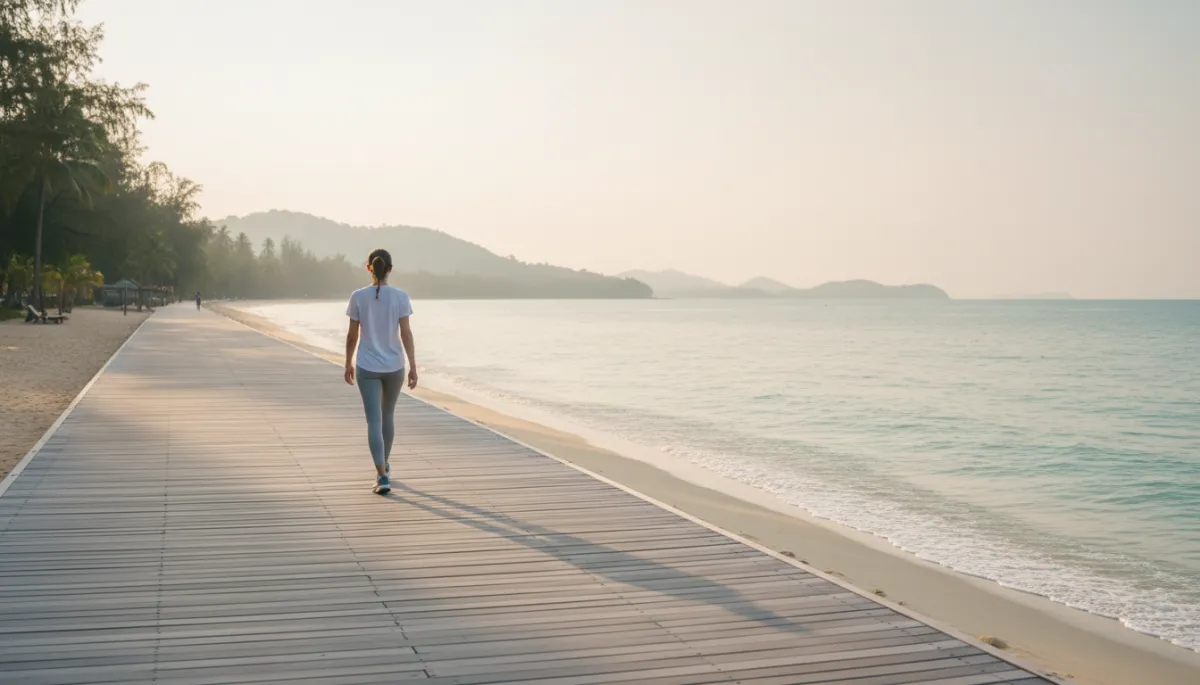
Gentle morning walks by the sea provide natural light that anchors your internal clock.
Warm Evenings and Outdoor Rituals: Winding Down Without Screens
The same Phuket environment that energizes you in the morning can help you unwind at night. Warm, comfortable evenings are ideal for low-intensity outdoor activities that support sleep quality without overstimulating your nervous system. Think gentle beach strolls at dusk, relaxed dinners in open-air restaurants, or quiet time on a balcony listening to the ocean or tropical sounds. These habits:
Lower stress hormones such as cortisol, which can otherwise delay Deep Sleep onset
Replace late-night screen time that suppresses melatonin and shifts circadian rhythms later
Create consistent cues that signal to your body that bedtime is approaching
Temperature, Humidity and Sleep Stages in a Tropical Climate
Deep Sleep is easiest to achieve when your core body temperature can drop slightly at night. While Phuket is warm and humid, modern accommodations make it possible to create a sleep-friendly environment. To support Deep Sleep and REM Sleep:
Set air conditioning or a fan to keep the bedroom cool but not cold—typically around 24–25°C works well for many people in the tropics.
Use breathable, lightweight bedding to avoid overheating, which can fragment Deep Sleep and cause frequent awakenings.
Consider a short, lukewarm shower before bed; as your skin cools afterward, it can promote the natural temperature drop that signals your body to transition into deeper sleep stages.
A Practical Phuket-Based Routine to Fix Broken Circadian Rhythms
Combining knowledge of Sleep Stages with the Phuket environment, you can design a simple daily routine that nudges your circadian rhythms back into alignment and improves sleep quality night after night. Below is a sample day that you can adapt based on your schedule and preferences.
Morning: Anchor Your Clock with Light and Movement
Wake at a consistent time, even on holiday. Aim for a window of no more than 30 minutes variation each day to stabilize circadian rhythms.
Get outside within an hour. A 20–30 minute walk on the beach or around your resort exposes you to bright light and gentle movement, both of which support alertness and help shift Deep Sleep earlier in the night.
Hydrate and eat a light, balanced breakfast. Including some protein can help stabilize blood sugar and energy levels through the morning, reducing the temptation for late caffeine that might later disrupt REM Sleep.
Midday and Afternoon: Support Nighttime Sleep with Smart Choices
Use the Phuket Environment for moderate daytime activity—swimming, gentle hikes, or yoga. Physical activity increases the drive for Deep Sleep later, but avoid very intense workouts too close to bedtime.
If you are jet-lagged, keep naps short (20–30 minutes) and avoid napping late in the afternoon. Long naps can confuse your circadian system, reducing sleep pressure and delaying both Deep Sleep and REM Sleep at night.
Limit caffeine after early afternoon. Caffeine can linger in your system for many hours and is a common hidden cause of reduced Deep Sleep.
Evening: Protect Your Sleep Stages with Calm and Darkness
Plan your last full meal at least two to three hours before bed. Heavy, late dinners can fragment sleep and reduce time spent in REM Sleep, especially in the second half of the night.
Use Phuket’s outdoor spaces as your evening “screen replacement.” Choose a relaxing walk, gentle stretching on the balcony, or quiet conversation instead of scrolling in a bright room.
About an hour before bed, dim indoor lights and shift to warmer tones if possible. This supports melatonin release, which helps you fall asleep more easily and progress smoothly into Deep Sleep.
Measuring Progress: Are Your REM and Deep Sleep Improving?
You do not need a lab to know whether your Sleep Optimization efforts in Phuket are working. While wearables can estimate REM Sleep and Deep Sleep, your daily experience is just as important. Signs that your circadian rhythms and sleep stages are improving include:
Falling asleep within 15–25 minutes of going to bed, without long periods of tossing and turning
Fewer nighttime awakenings and less clock-watching in the early hours
Waking up more refreshed, with less need for heavy morning caffeine
More stable mood, reduced irritability, and better focus throughout the day—signs your REM Sleep is doing its job
📌 Key Takeaway: You will usually notice improvements in energy and mood within a few days of consistent routines, even before your sleep metrics look perfect.
Common Mistakes That Undermine Sleep Optimization in Phuket
Even in an ideal setting like Phuket, a few habits can sabotage your circadian rhythms and sleep stages. Being aware of them helps you make better choices and fully leverage the Phuket environment for sleep quality.
Staying indoors all day: Relying on dim indoor lighting instead of bright natural light weakens the daytime signal your internal clock needs, leading to delayed sleep and reduced Deep Sleep at night.
Heavy late-night drinking: Alcohol may make you feel sleepy, but it fragments Deep Sleep and suppresses REM Sleep, especially in the second half of the night. Enjoy drinks earlier in the evening and alternate with water.
Irregular bed and wake times: Constantly shifting your schedule confuses your circadian rhythms, making it harder to fall asleep and wake naturally. Even on holiday, a rough routine pays off.
Bringing Phuket-Inspired Sleep Habits Home
One of the most valuable aspects of Sleep Optimization in Phuket is that it can act as a “reset retreat” for your circadian rhythms. However, the benefits do not have to end when your trip does. You can translate the principles of the Phuket environment into your everyday life:
Continue prioritizing morning light by opening curtains immediately after waking or taking a short outdoor walk, even in cooler climates.
Recreate evening wind-down rituals—dim lights, screen-free time, light stretching, or meditation—just as you might on a Phuket balcony at dusk.
Maintain a consistent sleep–wake schedule that feels sustainable in your normal routine, building on the rhythm you established during your stay.
Final Thoughts: Designing the Perfect Environment for Restorative Sleep
Sleep Optimization is not about chasing perfection or obsessing over every minute of REM Sleep and Deep Sleep. It is about creating conditions—internally and externally—that allow your body’s natural systems to do what they are designed to do. By understanding sleep stages, respecting your circadian rhythms, and using the Phuket environment as a powerful ally, you can transform not only how you sleep, but how you feel, think, and perform during the day.
Whether you are visiting Phuket to recover from burnout, adjust after long-haul travel, or simply improve your sleep quality, the combination of natural light, soothing evenings, and intentional routines offers a unique opportunity. Treat your time on the island as a living laboratory for better sleep: experiment with earlier bedtimes, consistent wake times, and more exposure to nature. Notice how your energy, mood, and clarity shift as your REM Sleep and Deep Sleep rebalance.
With a few deliberate choices, Phuket can become more than a beautiful destination—it can be the place where you finally fix your broken circadian rhythms and discover what truly restorative sleep feels like.